

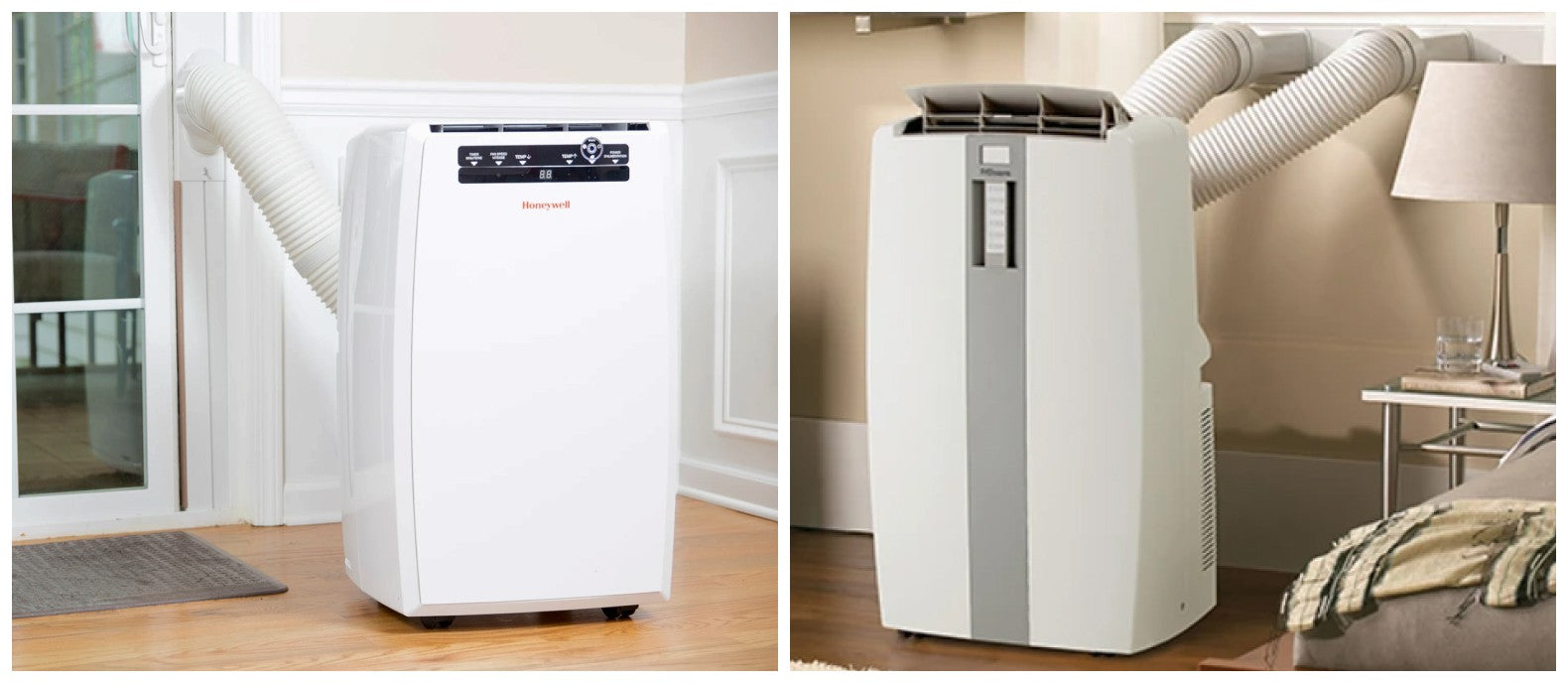
In order to cool your space, all portable air conditioners must be installed properly and exhaust hot air as they cool. This warm air is typically exhausted outside using an included window kit, but traditional windows aren't always available.
Read on to learn more about where you can install and how to vent a portable air conditioner:
- Why Do You Need to Vent Your Portable AC?
- VIDEO: How to Install Your Portable AC with a Window Kit
- Replacing Portable Air Conditioner Window Kits
- VIDEO: Sliding Glass Windows and Doors
- Casement Windows
- Wall Ventilation
- Ceiling Ventilation/Server Rooms
- Can I Connect My Portable AC to My Dryer Vent?
- How Long are Portable AC Exhaust Hoses?
- Can I Extend My Portable AC Vent Hose?
- Will Someone Be Able to Push My Window Open and Get Into My House?
Why Do You Need to Vent Your Portable AC?
Portable air conditioners cool your room by extracting hot air from the space. In order to cool efficiently and effectively, the hot has to exit the room. If the warm air is not vented outside, it will stay in your room, negating the cool air that is entering your space. So, all portable air conditioners will need to be vented to operate correctly.
How to Install Your Portable AC with a Window Kit
Most portable ACs are simple to install and vent using the manufacturer-provided window kit. In just a few steps, you'll be on your way to a more comfortable indoor space. Check out the following video to see how easy it is!
A standard window kit includes a window bracket, one or two vent hoses, and the vent hose adapters. The average vent hose extends 4 to 5 feet, so you need to install yours close to a window. Follow these steps to quickly set up your portable AC:
Steps 1-3: When venting a portable air conditioner, attach any hose connectors/adapters and insert the hose (or hoses).
Steps 4-5: Extend the adjustable window kit the length of your window. If necessary, trim the window bracket to fit your window snugly. Your specific model may come with screws to keep the window kit in place. Then close your window to secure the kit in place.
Step 6: Next, connect the vent hose to the window kit. With your model properly installed and vented, you can start cooling immediately. Just plug it in and program your settings. It's that easy!
Note: Customers often ask if they have to remove their window screen to install a portable air conditioner. More often than not, you don't need to remove your screen.
Replacing Portable Air Conditioner Window Kits
If you're looking to replace a window kit for your model, check out our Portable Air Conditioners Accessory page. It's best to get one from the AC's manufacturer, but chances are you can find one that fits your needs.
Always confirm the replacement window kit fits your model and window before purchasing it. If you need any help, feel free to call us at 1-800-934-9194.
Sliding Window and Sliding Door Ventilation
Standard window brackets are designed to be installed horizontally at the bottom of windows, but they can also be installed vertically to fit sliding windows and sliding doors. Some modifications of the window bracket may be required to install air conditioners for slider windows.
For sliding windows, you must ensure the bracket is long enough to fit the opening. Units that feature double window brackets generally work well for sliding windows. A double bracket includes the standard window bracket plus an additional filler bracket. After setting up the bracket, if there's still an opening, you can fill it with wood, Plexiglas, insulation, or some other type of filler material.
When working with air conditioners for sliding windows, the window brackets will not be long enough to fill the vertical opening. You must fill the extra space with other materials like plywood or Plexiglas.
Casement Windows
Since casement and crank windows open like doors, standard window kits will not fit them. But that hasn't stopped our resourceful customers. Many customers with casement windows simply cover the entire window opening with Plexiglas and cut out a hole for the exhaust hose.
Wall Ventilation
Some people prefer to exhaust hot air through a wall vent directly outside or to another room, such as a garage or storage room. You can use a jigsaw to cut the hole in the wall the correct size, but ensure there isn't any wiring or plumbing where you want to cut the hole. You can seal the edges of the hole with silicone caulk.
Industrial Portable AC Ventilation
Electronic equipment can produce a great deal of heat, but sensitive equipment must always be kept cool. Portable ACs are extremely popular for computer server rooms since they can cool the warm equipment to avoid overheating and other issues. The only problem is server rooms rarely have windows and are usually away from exterior walls.
Fortunately, most office buildings have drop or panel ceilings. Many portable air conditioners, like those from KwiKool, can be configured to vent into drop ceiling spaces.
Can I Connect My Portable AC to My Dryer Vent?
Often, a dryer vent isn't recommended to exhaust a portable air conditioner. Dryer vents have a 4-inch diameter, and most exhaust hoses are slightly larger in diameter. DeLonghi portable ACs, on the other hand, feature 4-inch exhaust hoses to fit most dryer vents. However, if the external opening of the dryer vent contains a flap, then the unit's hot air exhaust will not be strong enough to push it open. In this case, you would need to remove the flap and replace it with a screen.
How Long are Portable AC Exhaust Hoses?
Exhaust hose lengths vary by model, but generally, they are 4 to 7 feet in length.
Can I Extend my Portable AC Vent Hose?
It would be best if you did not try to extend the vent hose during portable air conditioner venting because doing so will decrease efficiency and could void the warranty.
Will Someone Be Able to Push My Window Open and Get Into My House?
Overall, your home should be secure with a portable air conditioner installed. However, with the venting kit installed, you can no longer use the lock on the window. Some customers get a security window lock for their portable AC units. The locks allow you to fasten and lock your window despite the vent kit.
What Other Venting Options Are There?
While venting out a window is the most common way, it's not the only option:
- Through a Door: If you don't have a window, you can use a venting kit to vent through a sliding door.
- Through a Wall or Ceiling: You can install a vent through an exterior wall or ceiling for a more permanent solution.
- Connecting to Dryer Vent: Venting your portable AC through your home's dryer vent may be possible. However, this option will likely require a specialized connector and custom installation.
- Installed Options: Consider a ductless mini split as another, more permanent solution. These air conditioners do require through-wall installation and typically require a professional, but leave your window completely free.
- Fans: If venting is absolutely not an option, you can always consider a household or commercial fan. A quality fan can output tremendous cooling power without requiring any exhaust venting.
- Evaporative Coolers: In hot and dry climates, evaporative coolers (or swamp coolers) can provide refreshing cold airflow without exhaust venting.
In Summary
Venting your portable air conditioner is easy. Attach any hose connector/adapters and insert the hose. Fit the window kit to the length of your window and secure the kit in place.
Still Have Questions?
With a little creativity and ingenuity, you can make a portable air conditioner work almost anywhere in your home or office. For more information on installing and operating a portable air conditioner, visit our Knowledge Center. Or call our product experts at 1 (800) 934-9194 for a free consultation and product recommendation. Be sure to carefully read the instruction manual before installing your new portable air conditioner.
