Signs Your Basement Needs a Dehumidifier
Basement dehumidifiers are a worthwhile investment even if you’re not experiencing any particular problems. However, there are some cases where dehumidifiers for basements are essential:
- Musty odors that won’t budge.
- Mold or mildew on walls/floors.
- Heavy condensation on windows/pipes.
- Rotting wood and rusting metal.
- Humidity levels above 50-60%.
- Increased allergy symptoms.
- Respiratory irritation in basement spaces.
Effective moisture control is easier than you think! All you need is the right basement dehumidifier system to take away water damage stress.
Choosing the Right Dehumidifier for Your Basement Needs
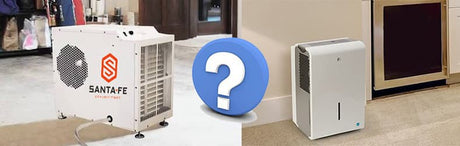
You want the best results possible. The type of basement dehumidifier that will give you those results depends on your situation. Luckily, we carry leading design brands offering advanced dehumidifiers for basements, including:
- Mild humidity/seasonal dampness: 30–50 pint units with built-in humidistats offer a convenient fix-all.
- High humidity/large basements: A higher-power unit with 70+ pint capacity and round-the-clock operation.
- Frequent water intrusion: You might prefer a unit that drains automatically with an integrated pump system.
- Finished basements/lots of storage: Protect your belongings with an ultra-quiet, ultra-smart device with timers and air filtration.
- Cold basements: A low-temperature model with auto-defrost functions will prevent coils from freezing up and breaking.
Where Should a Dehumidifier Be Placed in the Basement?
It’s not just about the type of basement dehumidifier you choose. Where you place it is just as important. Positioning correctly means maximizing efficiency and preventing breakdowns.
Here are some expert tips for placing dehumidifiers in basements:
- Place near the center of the room. Or, where humidity is heaviest.
- Leave 3–6 inches of clearance all around the dehumidifier for max airflow.
- Don’t put it near tight corners and blocked vents.
- Improve the dehumidifier's efficiency in larger spaces by using a fan to circulate air.
- If the unit has a drain hose, place it near a drainage spot or sump pump so it can run continuously.
Why Choose Sylvane?
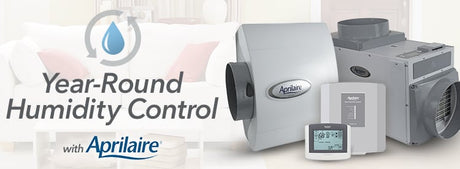
Sylvane takes pride in its track record of air quality excellence. For us, it’s not just about supplying business owners and homeowners like you with reliable dehumidifier basement options from leading brands like Santa Fe, AprilAire, and Friedrich, but about customer support, too.
When you buy from Sylvane, you’re partnering with an experienced air quality partner who puts your priorities first. That starts with providing detailed specs and breakdowns on every product, as well as extensive expert testing.
Our customer support team is even on hand to provide you with personalized guidance on finding the very best dehumidifier for basement use.
Once you’ve chosen your model, you’ll receive fast shipping and responsive support at every stage of your journey.
FAQs
What size dehumidifier do I need for my basement?
It depends on how big your basement is. Usually, anything between 50 and 80 pint capacity is enough. Smaller basements of less than 1500 sq. ft. only need around 50 pints, while anything larger might need 70+ pints.
Will a dehumidifier prevent mold growth?
If you’ve chosen the right type of basement dehumidifier and the right size, then it will prevent a large amount of mold growth, yes.
How do I drain a dehumidifier continuously?
If you don’t want the hassle of manually draining a dehumidifier for your basement every other day, choose one with an integrated pump. These can be connected to a drainage point and therefore drain automatically.
Can I use a dehumidifier in a cold basement?
Yes! However, you should choose a model that is specially designed for lower temperatures so the coils don’t freeze.
How often should I run a basement dehumidifier?
Most of our customers run basement dehumidifiers 24/7 for the best results.
Are there quiet models suitable for finished basements?
Yes! We carry a range of basement dehumidifiers specially designed to run exceptionally quietly for minimal intrusion.
How do I know when humidity levels are safe?
Use a hygrometer to test your humidity levels. Between 40 and 50% is ideal. Slightly lower or higher is generally safe, but you may start to notice humidity-related issues like mold or dry skin.