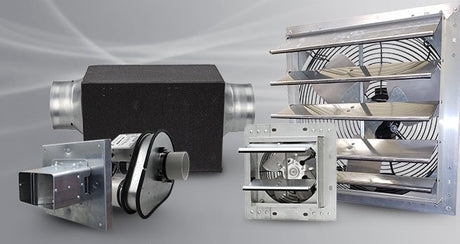
H2: What Is an HRV Fan?
HRV fans are whole-home or zoned ventilation systems that exchange indoor air with outdoor air. Here are some ways HRV fans function:
- Uses a heat exchanger core to transfer heat from outgoing stale air to incoming fresh air.
- Helps maintain indoor temperatures while increasing fresh air intake.
- Typically installed as part of a ducted ventilation system.
Unlike exhaust-only fans, HRV bathroom fans provide balanced, energy-efficient ventilation and improve heat recovery efficiency.
H2: Benefits of HRV Ventilation Fans
A heat recovery ventilation fan improves health, comfort, and efficiency. Here are a few benefits of these systems:
- Improved Indoor Air Quality: Removes stale air, odors, and indoor pollutants.
- Energy Efficiency: Recovers heat that would otherwise be lost during ventilation.
- Moisture Control: Helps reduce condensation and humidity buildup.
- Balanced Ventilation: Provides controlled air exchange instead of negative pressure.
- Year-Round Operation: Continuous or intermittent ventilation for consistent comfort.
Experience cleaner, fresher air without increased heating costs. Choose from our balancing HRV systems and enjoy the crisp, refreshing air quality in your space.
H2: Key Features to Look For
HRV ventilation fans have various performance advantages and installation needs. Here are some of the key features to keep an eye on when choosing your new HRV fan system:
- Airflow Capacity (CFM): Match ventilation rate to home size and layout.
- Heat Recovery Efficiency: Higher efficiency improves energy savings.
- Cold Climate Performance: Important for regions with extended heating seasons.
- Ducting Compatibility: Works with dedicated ventilation ducts or existing HVAC systems.
- Noise Levels: Quiet operation for living spaces.
- Controls & Automation: Timers, wall controls, or smart integration.
- Filtration: Captures dust and airborne particles before air enters the home.
Select an HRV system that meets your family’s ventilation needs without sacrificing comfort or efficiency.
H2: HRV vs. ERV vs. Exhaust Fans
HRV, ERV, and exhaust fans add value to your home. Compare the features of each fan system before you make your purchase:
Differentiators
HRV Fans
ERV Fans
Exhaust-Only Fans
Where to Use
Ideal for colder or mixed climates
Ideal for warm or humid climates
Ideal for quick moisture removal in your kitchen or bathroom.
Function
Transfers heat, not moisture, out of your home and preheats or precools it without mixing air streams.
Transfers both heat and moisture between air streams to balance the humidity levels.
Pulls stale air from your home and ventilates it outside. It removes air without replacement. Less energy efficient than HRV and ERV fans.
Air Quality
Improves air quality while conserving heat
Helps manage humidity year-round
Limited air quality improvement
HRV fans are ideal for homes in colder climates that need fresh air without heat loss. They work alongside other fan systems, providing a separate function from ERV and exhaust fans.
H2: Use Cases
HRV fans deliver the most value when used correctly in the right space. Here are the suggested areas to utilize HRV fans:
- Tightly Sealed Homes: Prevents stale air buildup in energy-efficient construction.
- Cold & Mixed Climates: Maintains warmth while ventilating.
- Basements & Bathrooms: Reduces moisture and condensation.
- Allergy-Sensitive Households: Improves air freshness and circulation.
- New Construction & Retrofits: Supports modern ventilation standards.
H2: Why Buy from Sylvane?
Sylvane is an expert provider of air quality improvement solutions that customers can trust. We provide a curated selection of high-quality HRV ventilation fans from trusted manufacturers, including Broan and Fantech. We provide expert support to match airflow capacity and system type to your home.
Browse the detailed product specs, comparisons, and installation guidance before choosing your heat recovery ventilation fan. We provide fast shipping on all orders and knowledgeable customer support that is trusted nationwide.
H2: FAQs
- What is the difference between an HRV and an ERV?
A heat recovery ventilation fan transfers only heat, making it ideal for cold climates to pre-warm incoming fresh air, while an ERV fan transfers both heat and moisture, making it better for mixed or humid climates by balancing humidity levels.
- Are HRV fans necessary in newer homes?
Yes, HRVs are often necessary and even required in newer homes because modern, airtight construction traps stale air and pollutants. HRV fans are crucial for fresh air and healthy indoor air quality while saving energy.
- Can an HRV work with my existing HVAC system?
Yes, an HRV can work with your existing HVAC system, especially forced-air systems, as they are designed to integrate with existing ductwork to bring in fresh air while recovering heat, improving air quality, and efficiency without replacing your furnace or AC.
- How much energy do HRV fans save?
Heat recovery ventilation fans save significant energy by pre-conditioning incoming fresh air with heat from outgoing stale air, often recovering 60% to over 80% of heat. This drastically reduces the HVAC load, saving 20% to 50% on heating and cooling costs, though actual savings depend on climate, unit efficiency, and home airtightness.
- Do HRV systems run year-round?
Yes, HRVs are designed to run year-round, providing fresh air, improving air quality, and helping with cooling in the summer by transferring heat.